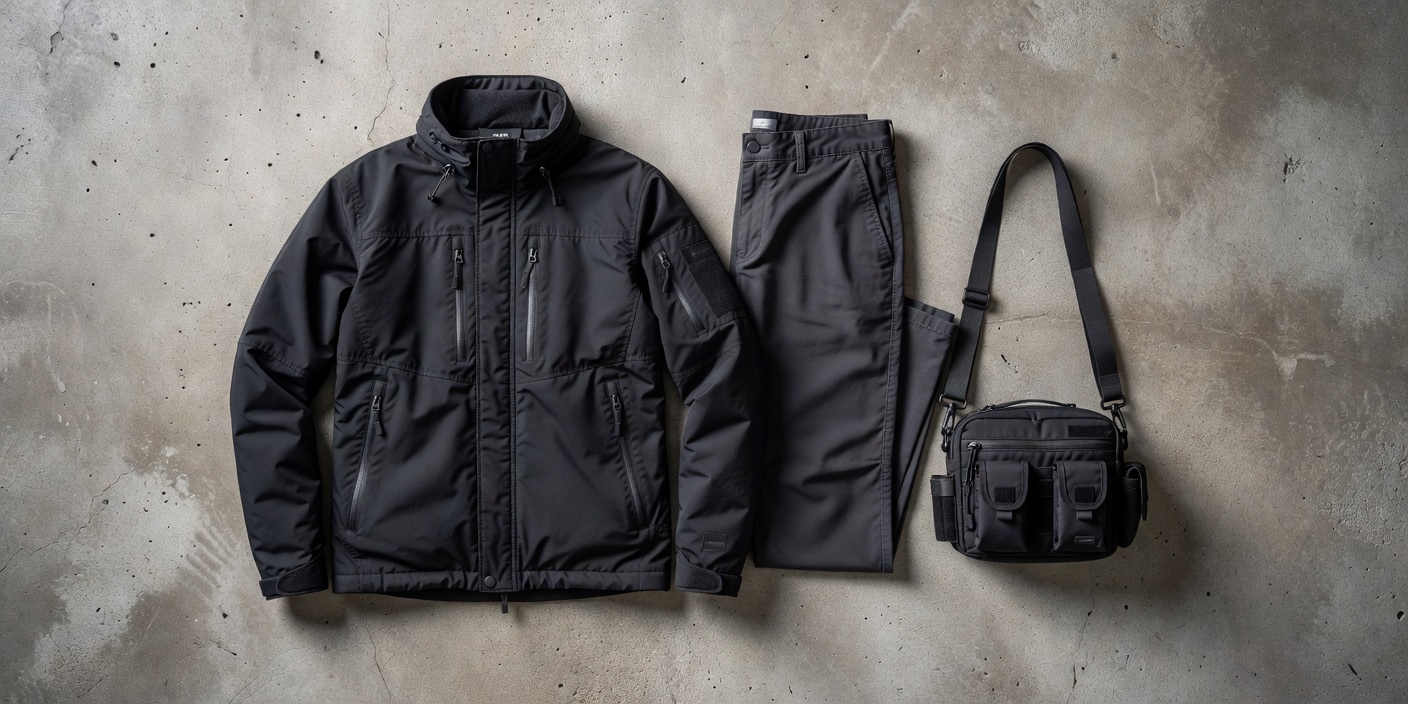
Techwear is not a synonym for cyberpunk
Techwear puts function, construction and material performance into the clothing conversation. Cyberpunk styling borrows its articulated shapes, layered shells and carrying systems, but an outfit can look futuristic without providing meaningful weather protection. Decorative straps and a technical-looking fabric tell you little about breathability, seam construction or how a garment behaves in use.
Cybergoth belongs to a different subcultural conversation, with clubwear, conspicuous synthetic colour and industrial-adjacent music among its recognisable associations. It can overlap visually with cyberpunk without becoming interchangeable with it. Keeping the labels distinct makes references more precise and avoids treating every black outfit with fluorescent details as the same tradition.
Build around movement, not attachment points
Begin with a silhouette you can actually inhabit. A structured outer layer over a simpler base gives the eye a clear hierarchy; a compact bag can add asymmetry without turning every surface into storage. Check the interaction between hems, pockets and straps while sitting, reaching and walking. An accessory that constantly catches is not made functional by looking industrial.
Matte fabric, worn leather and controlled reflective details create different kinds of contrast. You do not need all of them together. Charcoal and off-black can reveal construction more clearly than an undifferentiated mass of deep black. Use saturated colour as a deliberate accent rather than an obligation to reproduce a game’s lighting rig on your body.
Separate styling advice from protective equipment. A fashion mask, decorative armour panel or dramatic boot should not be assumed to provide certified protection. For ordinary wardrobe decisions, prioritise fit, care requirements and repairability over a speculative promise of future-proof utility.
A convincing future has been maintained badly
Cyberpunk environments often gain their force from layers: retrofitted cables against older masonry, expensive displays above damaged pavement, clean corporate interiors reached through crowded service spaces. The contrast makes uneven investment visible. A uniformly pristine neon city can erase the very social tension that gives the aesthetic its bite.
For photography, illustration or room styling, think in terms of a focal light, supporting darkness and material response. Wet surfaces spread reflections; brushed metal breaks them differently from glass. Avoid filling every available area with visual noise. Dense environments still need readable routes, recognisable scale and places where the eye can rest.
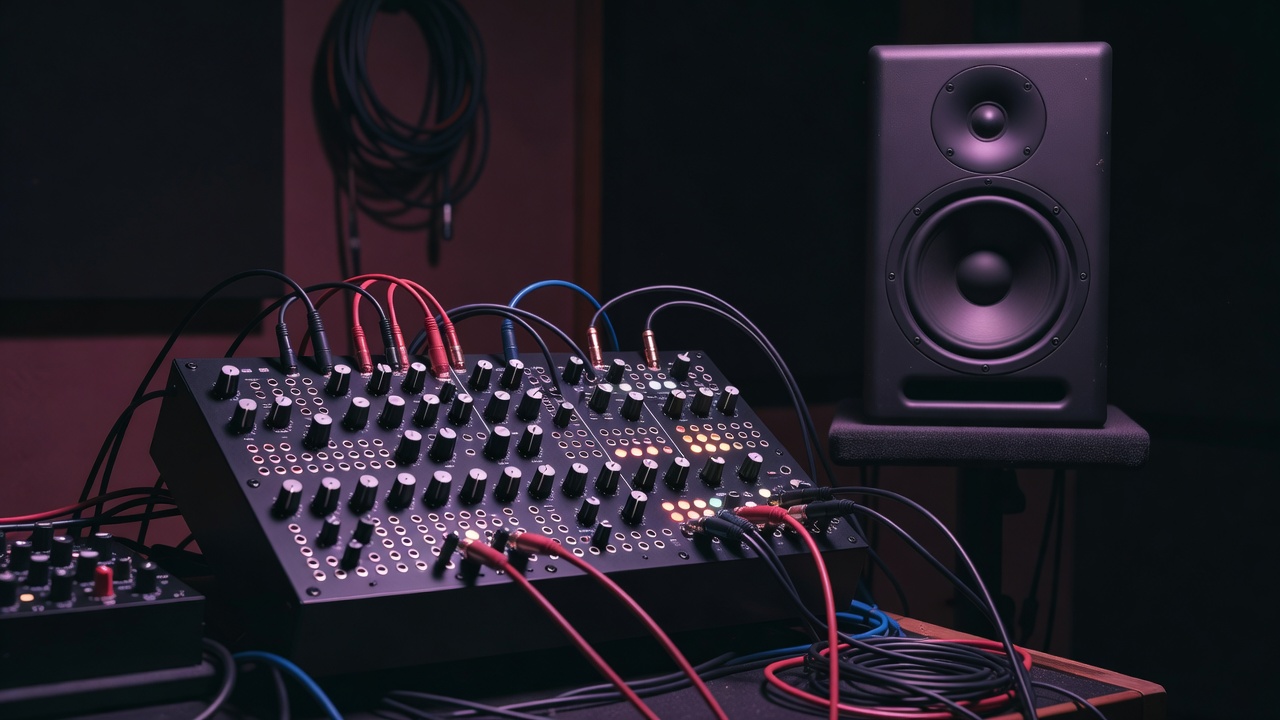
Synthwave is a neighbour, not the whole soundtrack
Synthwave often works through retro electronic timbres, cinematic nostalgia and recognisable melodic shapes. That can suit a cyberpunk image, but nostalgia alone does not produce the genre’s sense of social pressure. Darker tones do not automatically resolve the distinction either: a musical label describes a tradition or approach, not a guaranteed narrative politics.
Industrial music and EBM offer different relationships between repetition, bodily rhythm and abrasive texture. Electro can supply sharply articulated machine grooves; ambient music can make infrastructure feel vast or indifferent. These are useful points of comparison, not a claim that every track in those genres belongs on a cyberpunk soundtrack.
Listen to what surrounds the melody
The score to Blade Runner combines electronic atmosphere with other musical colours rather than reducing its city to a relentless beat. The animated Ghost in the Shell film uses choral and percussive textures that resist the assumption that technological imagery requires an exclusively synthetic sound. Both reward listening for the relationship between music and the world around it.
When assembling a personal listening sequence, vary density and pace. A low, spacious passage can make a later mechanical rhythm feel more forceful. Consider whether the music is meant to hold your attention, support reading or accompany a visual project; those are different jobs. For publication or public use, obtain the appropriate rights rather than assuming a purchased recording includes permission.
The strongest aesthetic choices share an underlying logic. Clothing shows adaptation, architecture shows accumulated use, and sound makes systems audible. That coherence is harder to buy than a coloured light, and much more interesting to build.