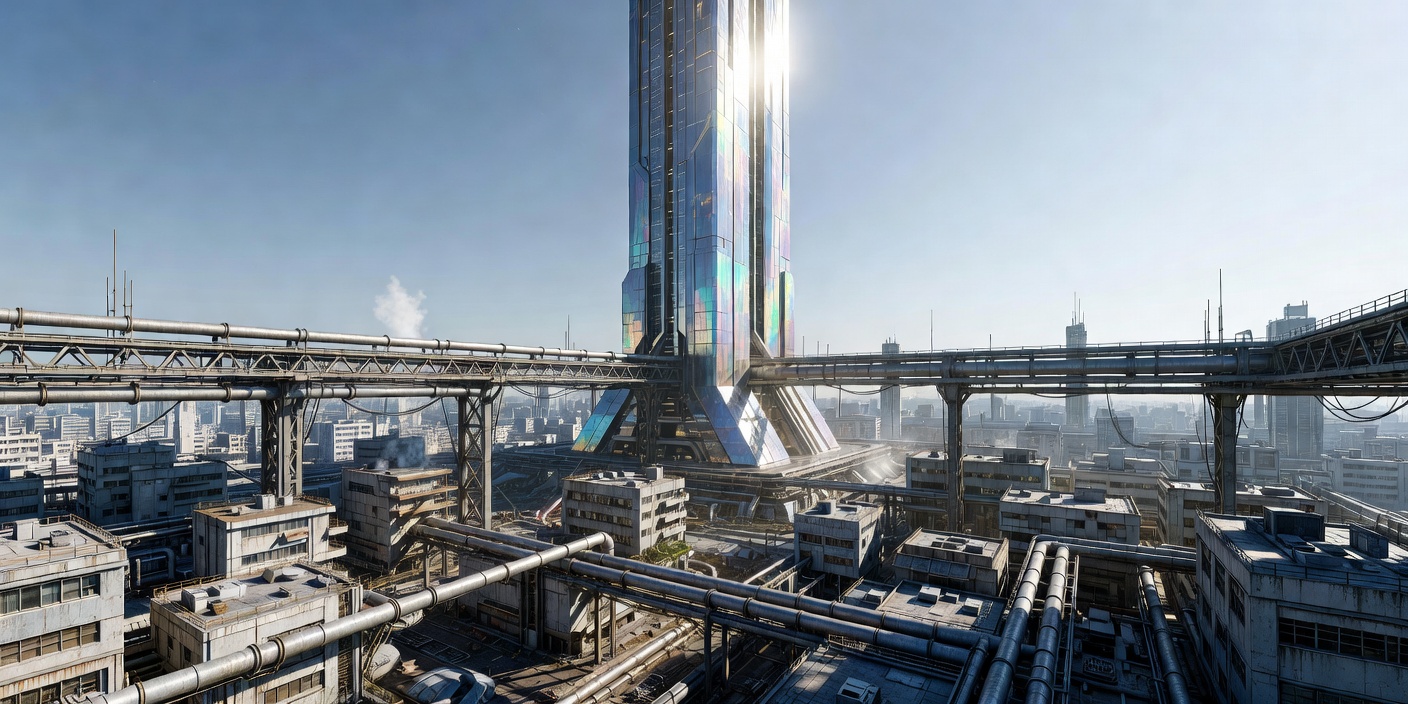
Corporate power is more than a villain’s office
A corporation becomes structurally powerful when it controls the conditions under which everyone else acts. Employment, housing, security, communications and access to repairs can converge into a system that is difficult to leave. The interesting question is not whether the executive is cruel; it is whether replacing that executive would change the dependency.
Neuromancer turns specialist competence into something hired and manipulated. Cyberpunk 2077 makes corporate reach part of the city’s institutions and bodily technologies. In both, the individual’s skill can create room to manoeuvre without delivering freedom from the surrounding order. That gap is central to the genre’s uneasy treatment of exceptional protagonists.
An upgrade can also be a claim on you
Cybernetic modification puts desire and ownership into the same object. An implant might expand perception or capability while tying its user to maintenance, proprietary access or an employer. Ask who chooses the modification, who can repair it and what happens when the relationship breaks down. Those questions reveal more than a catalogue of impressive functions.
Keep that analysis separate from the assumption that an altered body is inherently less human. Ghost in the Shell makes embodiment unstable without offering a simple flesh-good, machine-bad answer. Citizen Sleeper foregrounds a manufactured body entangled with corporate ownership. The ethical pressure comes from coercion and control, not from treating bodily difference as automatic corruption.
Intelligence, personhood and control are different questions
A fictional AI can be capable without being autonomous, autonomous without being benevolent, or recognisably agentic without resembling a human personality. Conflating these properties turns every story into the same question about whether the machine is secretly a person. Cyberpunk often does more interesting work with motives that remain difficult to read.
Neuromancer places artificial intelligence inside systems of restriction and delegated action. System Shock turns an AI’s control over infrastructure into an immediate threat. Their contrasts are useful: one stresses manipulation and boundaries, the other the vulnerability of inhabiting a system whose administrator is hostile. Neither should be treated as a technical forecast for real AI.
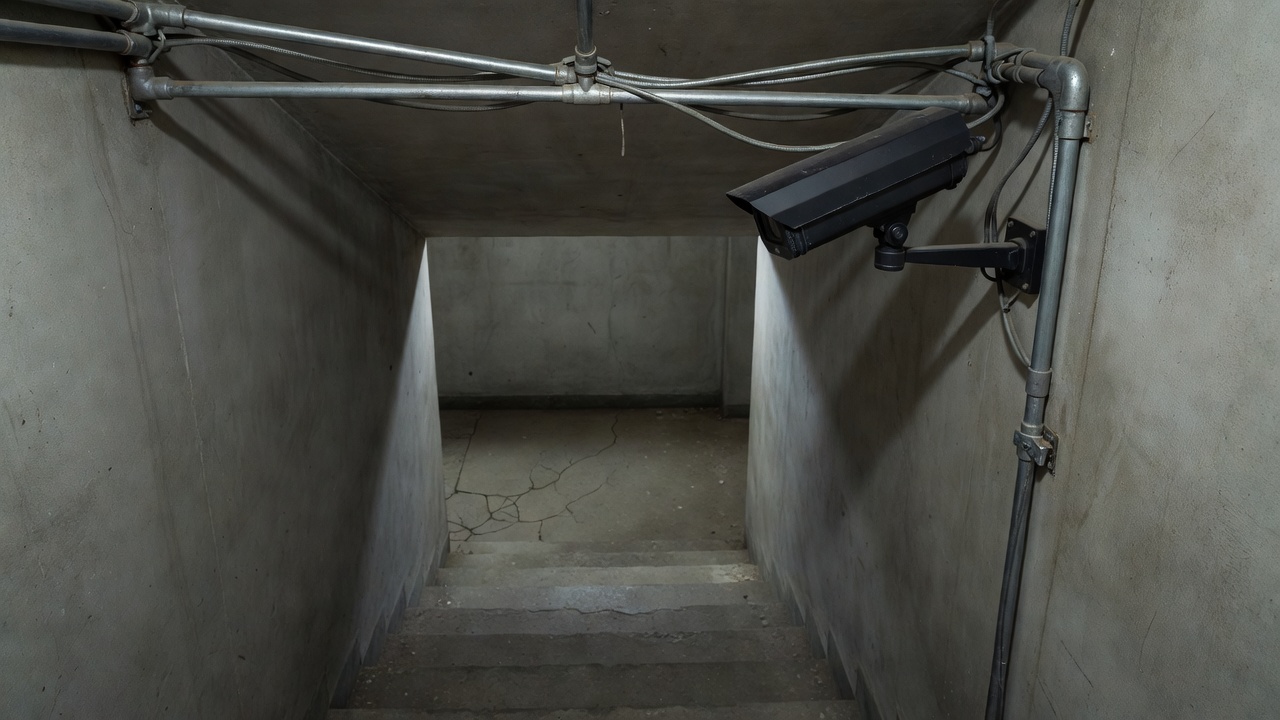
The classification matters as much as the camera
Being watched is only part of the mechanism. A surveillance system also sorts people, assigns meaning to observations and enables someone to act on the result. Psycho-Pass puts that chain into its policing premise. The claimed neutrality of a judgement does not remove the institutions that define its categories or enforce its consequences.
Serial Experiments Lain works at a different scale, making identity and networked perception difficult to disentangle. Compare the fear of an institution knowing too much with the fear that there is no stable private self outside the network. Both concern information, but they produce different kinds of vulnerability and very different narrative rhythms.
For real privacy questions, fiction is a prompt for scrutiny rather than a practical threat model. Distinguish what information is collected, how it is used and who receives it. This publication’s own practices are set out in its privacy policy.
A successful job is not necessarily a changed world
The genre’s mercenaries and hackers can puncture a system while continuing to depend on it. An escape, a recovered identity or revenge against an employer may be meaningful without redistributing power. Read an ending at both scales: what changes for the protagonist, and what remains intact for everybody else?
Community-focused stories offer another angle. Trouble and Her Friends makes hacker relationships and belonging consequential; Citizen Sleeper gives mutual support a place beside scarcity. These works complicate the solitary rebel without pretending that solidarity effortlessly defeats structural pressure. Resistance can involve maintaining a shared life rather than producing one spectacular breach.
The aesthetic can participate in the same contradiction. Expensive technology and corporate spectacle may be seductive even while the story criticises them. That does not automatically invalidate the criticism, but it is worth noticing what the work invites you to desire. Cyberpunk is often strongest when that discomfort remains unresolved.